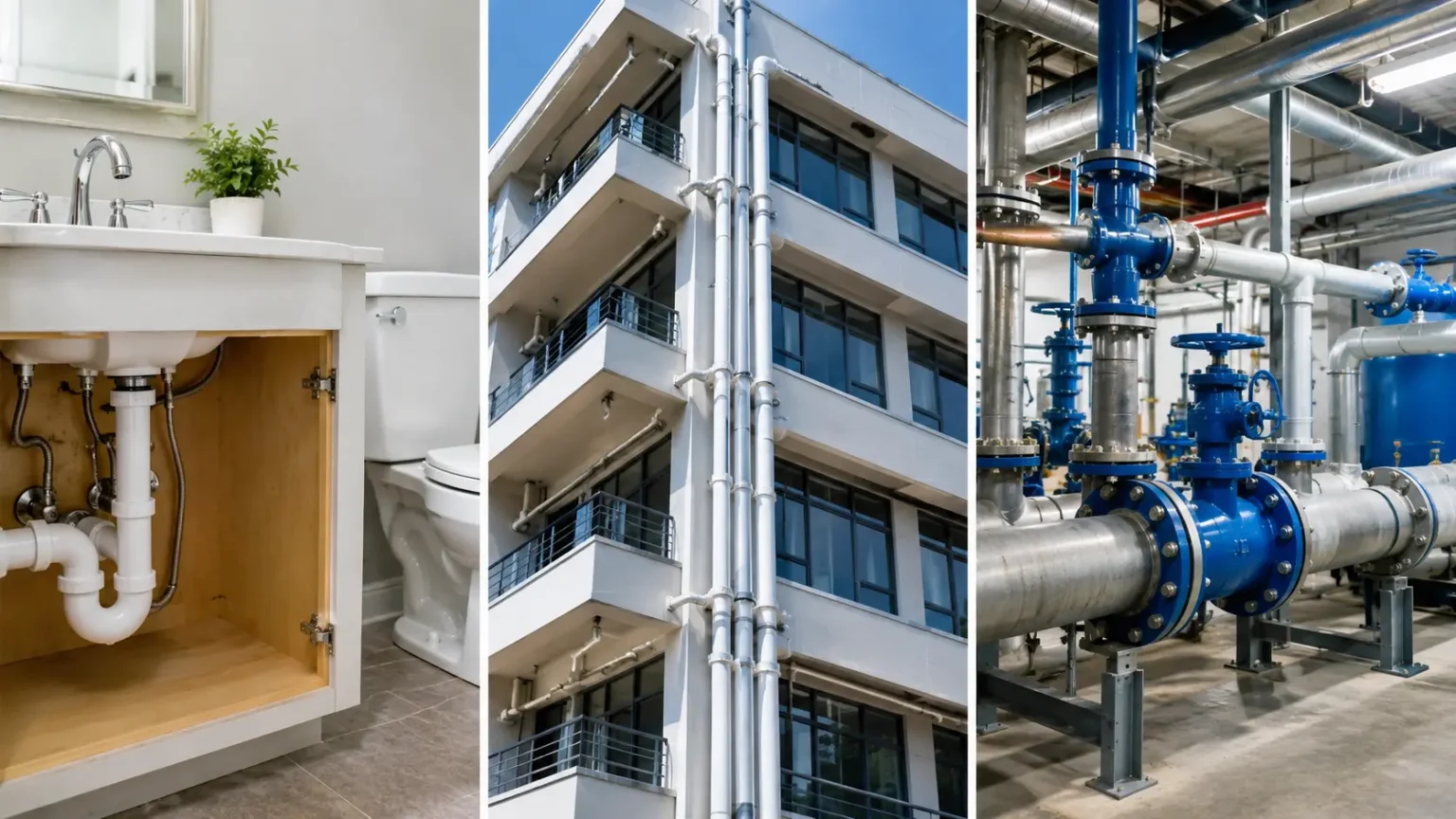
Plumbing keeps clean water flowing into your home and carries dirty water away. It also helps manage rainwater around your property. Every building needs a proper plumbing system to support daily tasks, prevent water damage, and protect health. However, not all plumbing systems serve the same purpose. Each one has a different job, from bringing fresh water inside to removing wastewater safely.
So, What Are Three Types of Plumbing? The three main types are water supply plumbing, sanitary drainage plumbing, and stormwater drainage plumbing. Understanding these systems helps you spot problems early and know when to call a professional plumber.
What Are the Three Main Types of Plumbing?
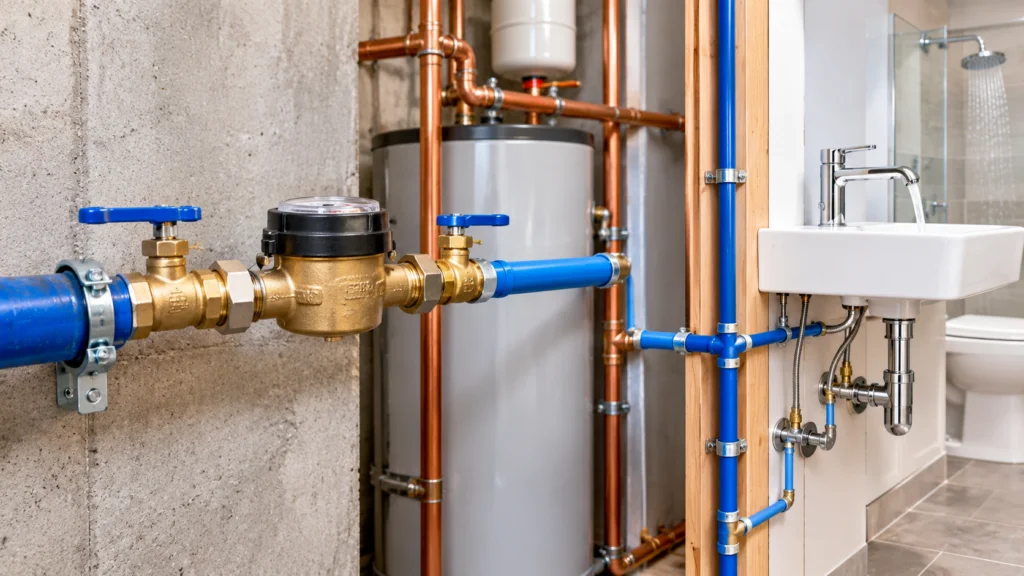
Most buildings use three main plumbing systems. Each system handles a different part of water movement and waste removal.
1. Water Supply Plumbing
A water supply system brings clean water into your home or building. It connects your property to a public water supply or private well. Pipes then carry water to sinks, showers, toilets, washing machines, and other fixtures.
This system usually includes:
- Water pipes: Carry clean water throughout the building.
- Valves: Control or stop water flow during repairs.
- Water meter: Measures how much water a property uses.
- Pressure regulator: Helps control incoming water pressure.
- Faucets and fixtures: Deliver water where people need it.
For example, when you turn on your kitchen faucet, the water supply system delivers water through connected pipes. Low water pressure, leaking pipes, and rusty water can point to supply problems. Regular checks help prevent leaks and costly repairs.
2. Sanitary Drainage Plumbing
A sanitary plumbing system removes wastewater from your property. It carries used water from sinks, showers, bathtubs, toilets, and appliances. The wastewater then travels through drain pipes into a public sewer or approved private treatment system.
Its main components include:
- Drain pipes: Carry wastewater away from fixtures.
- P-traps: Hold water to block sewer gases from entering rooms.
- Vent pipes: Help balance air pressure inside drain lines.
- Sewer lines: Carry wastewater away from the property.
- Cleanouts: Provide access for clearing blocked pipes.
For example, after taking a shower, used water flows through the drain and enters the home’s drainage network. A slow drain, frequent toilet blockage, or bad smell may indicate a problem. A blocked vent or damaged sewer line can also affect drainage. A plumber can inspect the system and find the cause.
3. Stormwater Drainage Plumbing
Stormwater drainage manages rainwater that collects on roofs, driveways, patios, and other outdoor surfaces. Its main purpose is to move rainwater away from buildings and reduce flooding risks.
Common components include:
- Gutters: Collect rainwater from the roof.
- Downspouts: Carry roof water toward the ground drainage system.
- Drain channels: Collect water from paved outdoor areas.
- Storm drains: Carry rainwater toward an approved drainage outlet.
- Underground pipes: Move collected water away from the property.
For example, during heavy rain, gutters collect roof water and downspouts direct it toward a safe drainage area. Blocked gutters, damaged downspouts, and clogged outdoor drains can cause water to collect near your foundation. Proper drainage helps protect your property from water damage.
What Is the Difference Between the Three Types of Plumbing?
The main difference is the type of water each system handles and where that water goes.
| Plumbing type | Main purpose | Common components |
| Water supply | Brings clean water inside | Pipes, valves, faucets |
| Sanitary drainage | Removes used water | Drains, traps, sewer lines |
| Stormwater drainage | Removes rainwater | Gutters, downspouts, storm drains |
These systems work together, but they should not be confused. Clean water needs a safe supply route, while wastewater needs a proper disposal route. Stormwater also needs a suitable drainage path. For example, a leaking supply pipe can damage walls, while a blocked sewer line can cause wastewater to back up. Poor stormwater drainage can lead to standing water around your home.
Which Type of Plumbing Does Your Home Need?
Most homes need all three types of plumbing systems. Each one supports a different household need. A water supply system provides water for drinking, cooking, bathing, and cleaning. A sanitary drainage system removes wastewater from toilets, sinks, and showers. Stormwater drainage helps prevent rainwater from collecting around your home.
Your exact plumbing needs depend on your property, local building codes, and existing connections. Older homes may need pipe repairs or drainage upgrades. New homes need properly planned systems before construction is complete. A licensed plumber can inspect your property and recommend suitable repairs or installations.
Residential vs. Commercial Plumbing Systems
A residential plumbing system serves houses, apartments, and other living spaces. It usually has fewer fixtures and lower daily water demand than commercial properties. A commercial plumbing system serves offices, restaurants, hotels, schools, and other business buildings. These properties often have larger pipes, more fixtures, and higher water demand.
For example, a family home may have two bathrooms, while a restaurant may have several sinks, restrooms, and kitchen drains. Commercial systems also need regular inspections to handle heavy daily use. Both systems require proper installation, safe water supply, and reliable drainage. However, commercial properties may need more complex maintenance and repairs.
Signs You Need Professional Plumbing Services
Some plumbing problems start small but can cause serious damage if ignored. Watch for these warning signs:
- Low water pressure: May point to leaks, blockages, or pressure issues.
- Leaking pipes: Can damage walls, floors, and nearby fixtures.
- Slow drains: Often indicate buildup or blockages inside pipes.
- Sewer odors: May signal a dry trap, blocked vent, or damaged drain.
- Water pooling outside: Can indicate poor stormwater drainage.
- Frequent clogs: May point to deeper problems in your drain lines.
If you notice these issues, avoid guessing at the cause. Professional Plumbing Services In San Diego can help inspect your pipes, identify the problem, and recommend the right repair.
At All About Drains And Plumbing, timely plumbing inspections and proper repairs can help protect your property and keep your plumbing system working well.
How Can You Maintain Your Plumbing System?
Good maintenance helps reduce plumbing problems and extends the life of your pipes. Follow these simple steps:
- Check for leaks: Look under sinks and around toilets for signs of water.
- Clean your drains: Remove hair and debris before they cause blockages.
- Avoid pouring grease: Keep cooking oil and grease out of kitchen drains.
- Inspect gutters: Remove leaves and dirt to maintain proper rainwater flow.
- Know your shut-off valve: Learn how to stop the water supply during an emergency.
- Schedule inspections: Ask a professional to check older pipes and drainage lines.
Never ignore repeated leaks, sewer odors, or water backups. These problems may need professional attention.
Conclusion
Understanding What Are Three Types of Plumbing? helps you see how your property’s water systems work. Water supply plumbing brings clean water inside, sanitary drainage removes wastewater, and stormwater drainage carries rainwater away.
Each system plays an important role in keeping your property safe and functional. Regular maintenance and timely repairs can prevent costly damage. If you notice plumbing issues, Contact Us Today to schedule a professional inspection and keep your plumbing system working properly.
Frequently Asked Questions
What are the three main types of plumbing?
The three main types are water supply plumbing, sanitary drainage plumbing, and stormwater drainage plumbing. Each handles a different water-related task.
What is the most common type of plumbing system?
Water supply and sanitary drainage systems are essential in most homes. They provide clean water and remove wastewater every day.
What is the difference between water supply and drainage plumbing?
Water supply plumbing brings clean water into a building. Drainage plumbing carries used water away through connected pipes and sewer lines.
What are the main components of a plumbing system?
Common components include water pipes, valves, faucets, drain pipes, traps, vent pipes, and sewer connections. The exact parts depend on the system.
Do residential and commercial buildings use the same plumbing systems?
Both use water supply, sanitary drainage, and stormwater drainage systems. However, commercial buildings often need larger pipes and more fixtures to handle higher demand.
How often should home plumbing be inspected?
Check visible pipes and fixtures regularly. A professional inspection is useful when you notice leaks, slow drains, unusual odors, or repeated blockages. Older properties may need more frequent checks.