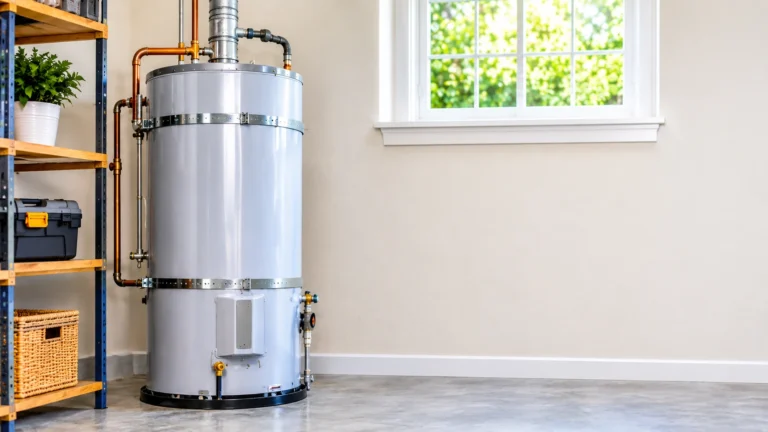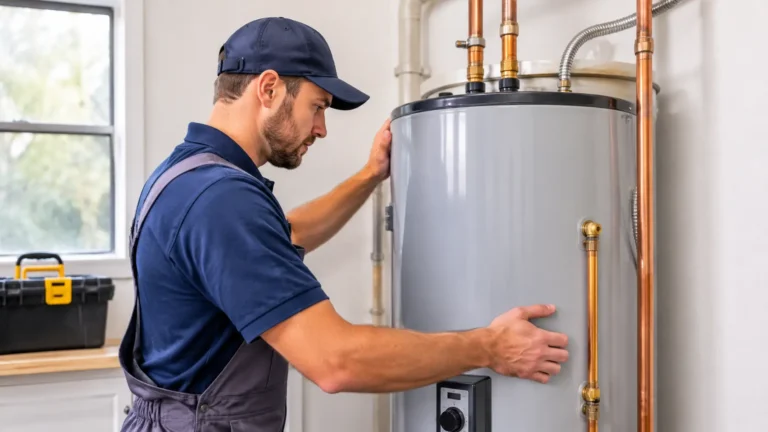
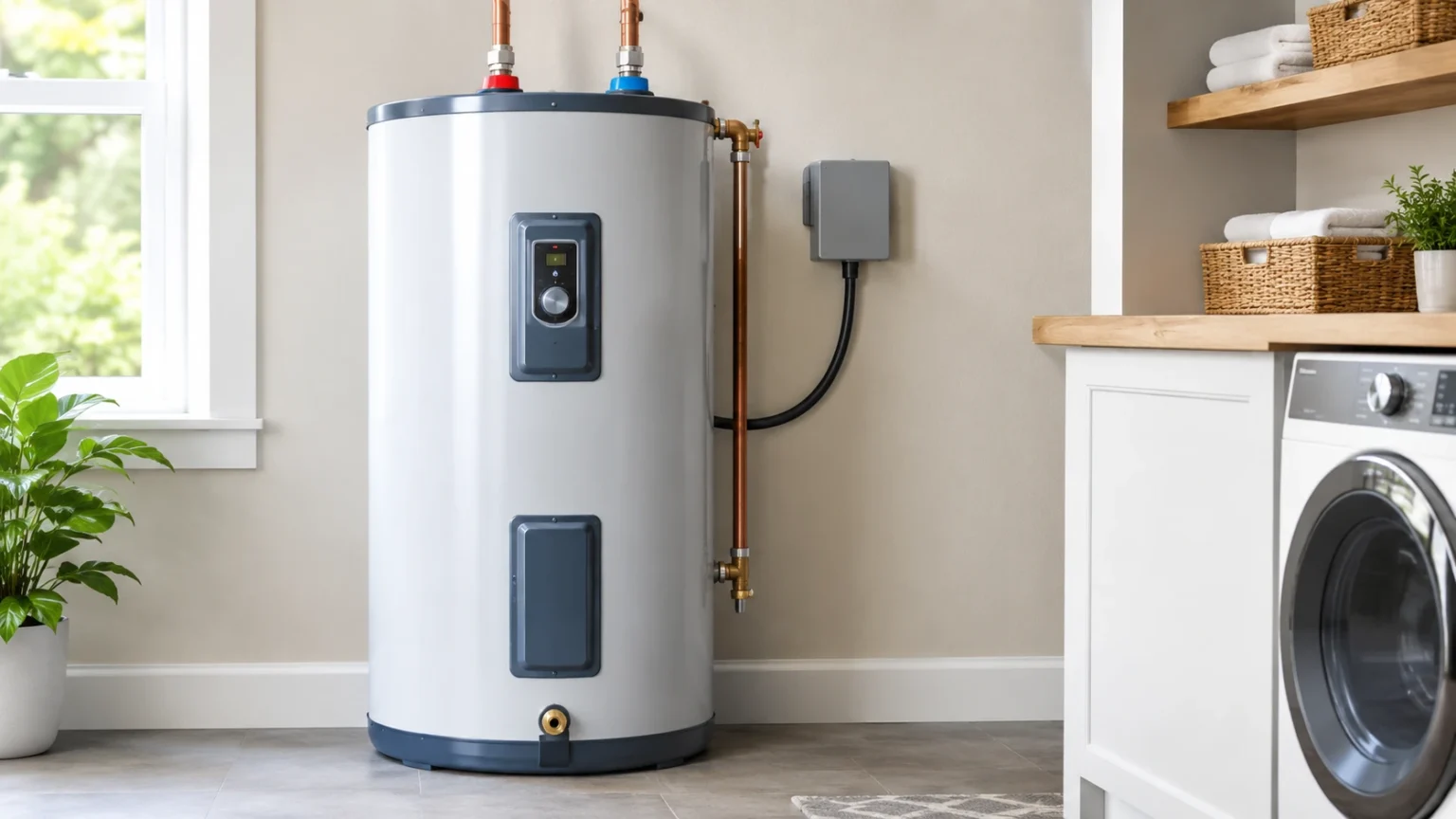
An electric water heater uses electricity to heat water for showers, sinks, laundry, and other household needs. It can store hot water in a tank or heat water as it flows. The right model depends on your home’s size, daily water use, and budget.
If you are asking What Is an Electric Water Heater?, it is a home appliance that uses electric heating elements to provide hot water. Understanding how it works, its types, costs, and common problems helps you choose the right system and care for it properly.
How Does an Electric Water Heater Work?
An electric water heater uses electrical power to raise the temperature of cold water. The exact process depends on whether the unit has a storage tank or heats water on demand.
How Do Electric Water Heaters Work in Tank Systems?
A standard tank water heater holds cold water inside an insulated tank. When you turn on a hot water tap, the unit supplies hot water from the tank.
Here is how the process works:
- Cold water enters the tank through an inlet pipe.
- Electric heating elements warm the water inside the tank.
- A thermostat checks the water temperature and controls the heating elements.
- Hot water rises toward the top of the tank as cooler water enters below.
- When the water cools, the thermostat signals the elements to heat it again.
Most homes set their water heater to around 120°F (49°C). This temperature can help reduce scalding risks while providing useful hot water. Your household needs and local safety guidance may affect the best setting.
How Does a Tankless Electric Water Heater Work?
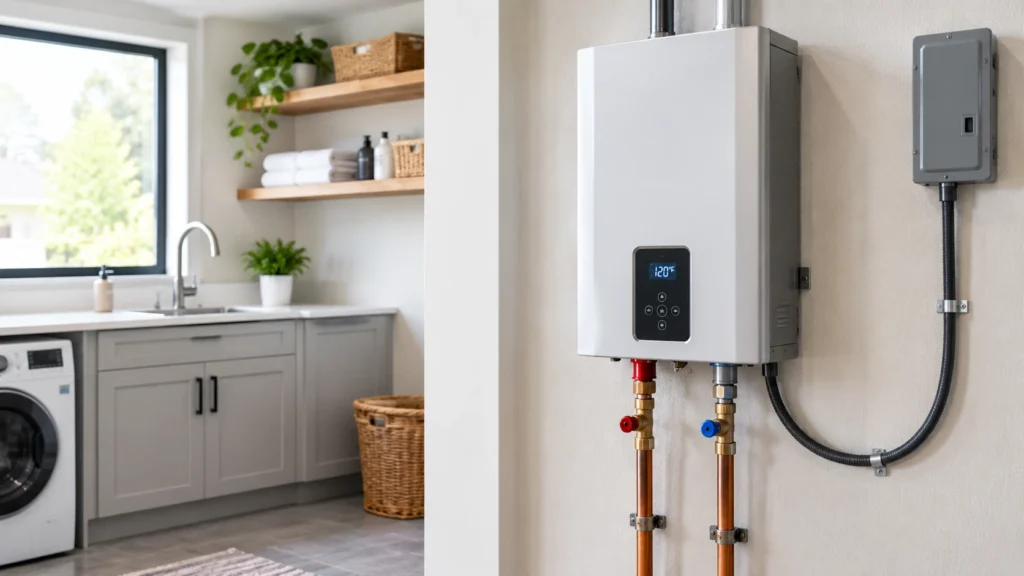
A tankless unit does not store a large supply of hot water. Instead, it uses powerful electric heating elements to warm water as it passes through the unit.
When you open a hot water tap, cold water flows into the heater. The elements heat the water before it reaches your tap.
Tankless models can save space and avoid the standby heat loss linked to storage tanks. However, their output depends on the unit’s power and the amount of water flowing through it. Running several showers or appliances at once may exceed its heating capacity.
What Are the Main Types of Electric Water Heaters?
Choosing the right type helps you balance hot water supply, energy use, and installation costs.
1. Storage tank water heater
This common type stores heated water in an insulated tank. It suits families that need hot water throughout the day. Tank sizes vary, so choose one based on household demand.
2. Tankless electric water heater
This compact unit heats water when needed. It takes up less space and avoids keeping a full tank hot. Check its flow rate before buying, especially for homes with several bathrooms.
3. Heat pump water heater
This system moves heat from the surrounding air into the water. It uses electricity to move heat rather than relying only on electric resistance elements. It can use less energy, but needs enough space and suitable room conditions.
What Are the Benefits of an Electric Water Heater?
An electric water heater offers several benefits for homes and small businesses.
- No gas connection needed: It works with a suitable electrical supply, which helps homes without gas lines.
- Simple operation: Most models use thermostats to control water temperature automatically.
- Several model choices: You can choose a tank, tankless, or heat pump system.
- Flexible placement: Some compact units fit in small utility areas, depending on clearance and electrical needs.
- Potential energy savings: Efficient models, especially heat pump units, may lower energy use compared with standard electric tanks.
Electric heaters also have limits. Standard tank models can run out of hot water during heavy use. Tankless models may need costly electrical upgrades. Your actual running cost depends on electricity rates, heater efficiency, and daily water use.
What Factors Should You Consider Before Choosing One?
Choosing the right electric water heater starts with understanding your household’s needs. A model that works well for one home may not suit another.
Household Size and Hot Water Demand
Think about how many people live in your home and when they use hot water. A family that takes several showers each morning may need a larger tank or a higher-output system.
For tank models, compare the tank capacity and first-hour rating. For tankless units, check the flow rate and temperature rise they can provide.
Energy Efficiency and Running Costs
Look at the energy rating and estimated yearly energy use. A cheaper unit may cost more to run over time. Heat pump water heaters often use less electricity than standard resistance models. Their performance depends on the room temperature, installation location, and hot water demand.
Electrical Supply and Installation Space
An electric water heater needs a suitable circuit and the correct wiring. Larger units may need dedicated circuits or changes to your electrical panel. Measure the installation area before buying. Allow space for maintenance, pipes, and any required safety clearances. A qualified professional can check whether your home can support the unit.
How Much Does an Electric Water Heater Cost?
The total cost depends on the heater type, capacity, labor rates, and the condition of your existing plumbing and electrical systems. A basic tank replacement is often less expensive than installing a tankless system or changing to a heat pump model. A new installation may cost more if it needs new wiring, pipe changes, or electrical panel upgrades.
Before approving the work, ask for a written estimate that separates the unit, labor, permits, and extra materials. Compare the expected running costs as well as the purchase price. This gives you a clearer picture of the long-term expense.
What Are Common Electric Water Heater Problems?
Understanding common faults helps you spot trouble early. Some issues need a trained professional to prevent electrical hazards or water damage.
- No hot water: A tripped breaker, faulty thermostat, or failed heating element may be responsible.
- Hot water runs out quickly: The tank may be too small, sediment may have built up, or a heating element may have failed.
- Water takes too long to heat: Heavy use, a low thermostat setting, or a damaged element may slow recovery.
- Water leaks around the unit: Loose connections, a faulty valve, or a corroded tank may cause leaks.
- Unusual noises: Sediment buildup can cause popping or rumbling sounds in a storage tank.
Check the breaker only if it is safe to do so. Never remove electrical covers or touch exposed wiring while the unit is powered. If the breaker trips repeatedly, do not keep resetting it. Contact a qualified professional. A leaking tank, burning smell, or signs of electrical damage also need prompt attention. If water is near electrical parts, stay clear and seek qualified help.
When Should You Ask a Plumber for Help?
Some water heater problems need professional repair. Contact a qualified plumber if your heater leaks, stops heating water, makes unusual noises, or struggles to meet your household’s needs. You should also seek professional help when replacing an old unit, installing a tankless model, or changing the heater’s location. Electrical work may require a licensed electrician, depending on local rules.
If you need help choosing or replacing a unit, All About Drains And Plumbing can help you explore your options. Visit our Water Heater Installation Service Carlsbad page to learn more about professional installation services. Do not attempt complex electrical repairs yourself. A trained professional can inspect the unit, identify the fault, and explain the safest repair options.
How Can You Maintain an Electric Water Heater?
Regular care helps your heater work safely and may extend its useful life.
- Check for leaks: Look around the pipes, valves, and tank for moisture or corrosion.
- Follow the manufacturer’s instructions: Use the recommended inspection and maintenance schedule.
- Check the temperature setting: A setting near 120°F (49°C) suits many homes, but household needs can vary.
- Arrange regular inspections: A professional can check safety parts, connections, and signs of wear.
- Address sediment buildup: Ask a professional whether flushing is suitable for your model and water conditions.
Never cap or block a temperature and pressure relief valve. This safety device helps protect tank water heaters from dangerous pressure. Follow the manufacturer’s guidance for all maintenance tasks.
Conclusion
An electric water heater uses electricity to supply hot water for daily household needs. Tank, tankless, and heat pump models each offer different benefits. The best choice depends on your water use, available space, electrical supply, and budget.
If you are still asking What Is an Electric Water Heater?, remember that the right system should provide enough hot water safely without wasting energy. Compare suitable models, check installation requirements, and arrange professional help when needed. Contact us today to discuss your water heater installation or repair needs.
FAQs
What Is an Electric Water Heater used for?
An electric water heater provides hot water for showers, sinks, laundry, dishwashing, and other household tasks. It uses electricity to heat water in a tank or as water flows through the unit.
How do electric water heaters work without gas?
Electric water heaters use heating elements or heat pump technology instead of burning gas. They need a suitable electrical supply to heat water and maintain the required temperature.
Is an electric water heater expensive to run?
Running costs depend on your electricity rate, household water use, and heater efficiency. Heat pump models often use less electricity than standard electric resistance models.
How long does an electric water heater take to heat water?
A tank heater may need an hour or more to heat a full tank, depending on its size and power. Tankless models heat water as it flows, while heat pump models may recover heat more slowly than standard resistance units.
What temperature should an electric water heater be set to?
Around 120°F (49°C) is suitable for many homes. However, some households have different needs. Follow the manufacturer’s instructions and seek professional advice if you have concerns about scalding or water safety.